
Best way to pack kitchen items for moving
Moving house is one of life's bigger undertakings, and the kitchen is often the room people dread tackling most. It's full of breakables, awkward shapes, sharp objects, and that one drawer everyone has that's somehow collected 47 random items over the years. Knowing the best way to pack kitchen items for moving can save you a lot of stress, a lot of time, and hopefully a lot of broken crockery.
Whether you're moving across Bargara or relocating from one end of Queensland to the other, this guide will walk you through how to get your kitchen packed up properly. Before you start, have a look at a really helpful tool called the moving house checklist that can help you organise your time schedule and preparation stages leading up to moving day.
Start with a declutter (seriously, do this first)
Before you pull out a single box or sheet of packing paper, go through your kitchen and be ruthless. Moving is the perfect opportunity to let go of the things you've been holding onto for no good reason. That chipped mug from 2014, the fondue set you've used once about 30 years ago, the four spatulas when you only ever use one. Donate what's still useful, bin what isn't. Organisations like Lifeline do great work, partly funded through donated items sold through their shops.
Ultimately, the less you pack, the less you have to move and unpack. It's that simple.
Gather the right packing supplies
Good packing starts with good materials. You'll want:
- Sturdy double-walled boxes in a range of sizes (small boxes for heavy items like pots and pans, medium and large for lighter things)
- Plenty of packing paper (newspaper works, but can leave ink on your items)
- Bubble wrap for anything particularly fragile
- Packing tape and a good tape gun
- Permanent markers for labelling
Resist the urge to go too big with your boxes. A large box filled with pots and pans is a potential back injury waiting to happen. Your local or Bargara removalist can supply you with the right materials if you have trouble acquiring them locally.
How to pack your kitchen, section by section
Plates and bowls
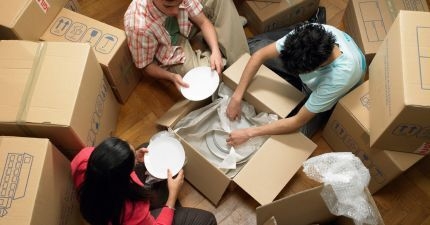
Stack plates vertically like records rather than horizontally like a pile. It sounds counterintuitive, but plates are much less likely to crack when packed on their edge. Wrap each one individually in packing paper, and place crumpled paper or bubble wrap at the base of the box for cushioning. Fill any gaps so nothing shifts in transit.
Bowls can be nested together with paper between each one, then wrapped as a group.
Glasses and mugs
Glasses are the most nerve-wracking things to pack, but they travel well if you take the time to do it right. Stuff the inside of each glass with crumpled paper first, then wrap the outside. Pack them upright in the box, never upside down, with plenty of padding between each one. Fill any spaces with crumpled paper or packing peanuts.
For mugs, wrap handles separately and make sure there's no movement in the box once it's sealed.
Pots, pans and baking trays
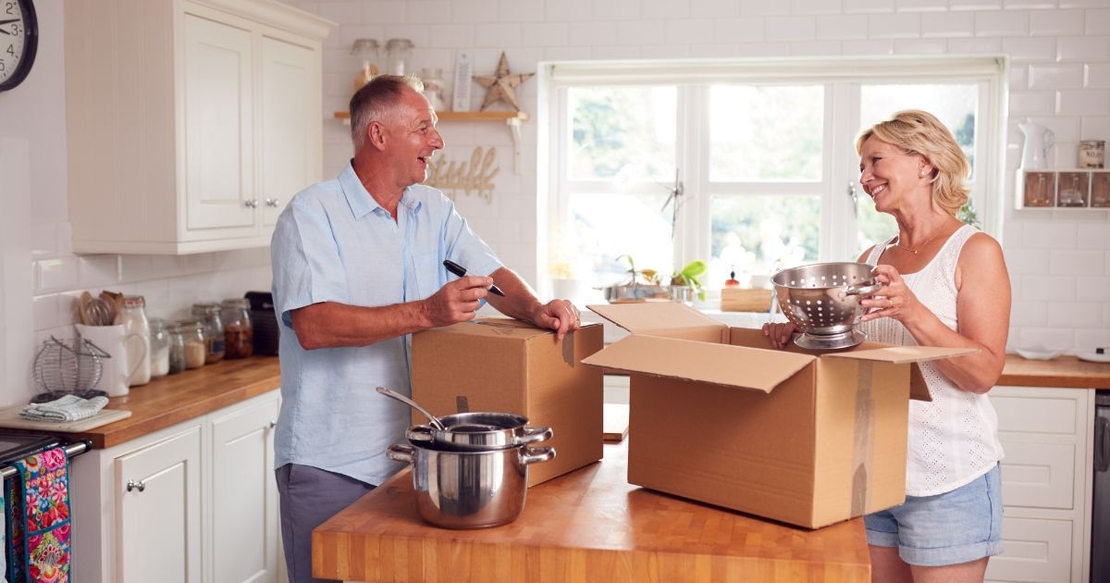
These are your heaviest items and the most forgiving. Nest smaller pots inside larger ones and place a layer of paper or a tea towel between them to prevent scratching. Lids can be wrapped separately and packed alongside.
Cast-iron pans deserve their own box, given their weight. Don't mix them with fragile items.
Sharp knives
Never throw loose knives into a box. Wrap each knife individually in several layers of paper, fold over the blade end and tape it securely. Better yet, keep your knife block intact, wrap the whole thing, and pack it in its own box or a sturdy bag. This saves you having to wrap each knife separately and reduces the risk of cutting your fingers on unpacking.
Small appliances
Ideally, pack small appliances in their original boxes if you've kept them. If not, wrap each appliance in bubble wrap and pack tightly with crumpled paper around it. Wrap cords and secure them to the appliance with a rubber band or twist tie so they're not flopping around. Ensure that each appliance is clean and completely dry before packing it.
Remove any detachable parts and wrap those separately. A blender blade rattling around inside the jug during the move is asking for trouble.
Large appliances
If you don’t have the original boxes for large appliances, puddle them in moving blankets or normal blankets, towels and other soft cushioning and secured with strapping. Ensure they are all free of water before putting on the truck.
Pantry items
Dry goods in sealed containers travel fine. Opened packets should be placed in zip-lock bags first to avoid spills. Oils, vinegars, and sauces should be wrapped in plastic wrap around the lids before packing upright in a box lined with a plastic bag, just in case.
Perishable items from the fridge and freezer should be the last thing you deal with on moving day and the first thing sorted when you arrive. Use freezer blocks in an esky for your perishables.
Bottles and taller items
If possible, get hold of the inserts and boxes for wine which you can use to separate and protect bottles in transit.
Label everything (and be specific)
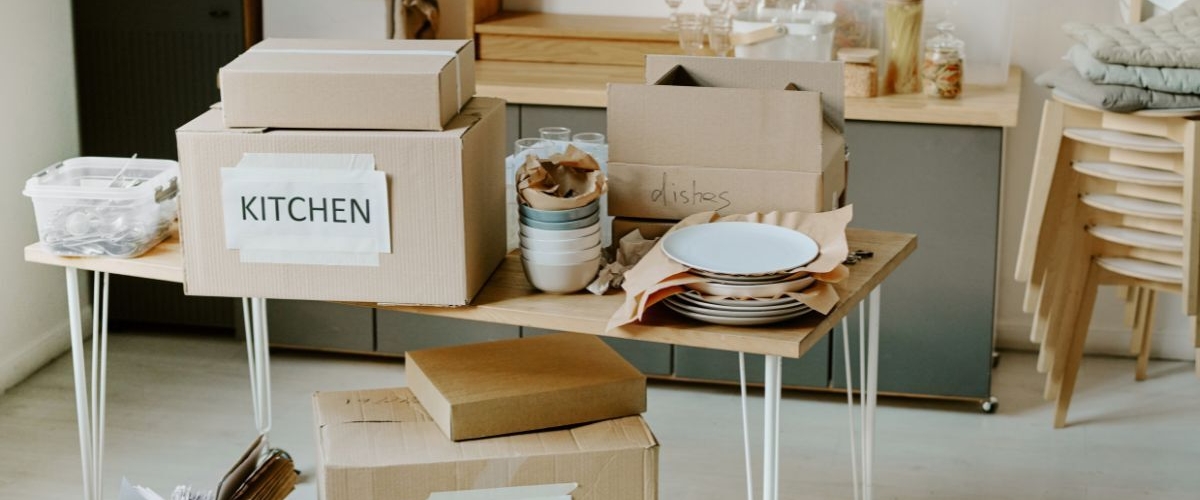
"Kitchen" isn't enough. Write "Kitchen - fragile glasses" or "Kitchen - pots and pans" on every box, and mark the fragile ones on all four sides plus the top. Your removalist team will appreciate it, and so will you when you're unpacking. Make your lettering large so that you and the removalists can see it at a glance.
Mark boxes with which way is up, too. A simple arrow goes a long way.
Tips for moving day itself
On the day, have your kitchen boxes packed and ready to go before your removalist arrives. Keep one box aside as an "essentials" kit with things you'll need straight away at the new place: the kettle, a couple of mugs, tea and coffee, some snacks, and a set of basic utensils. This box travels with you in the car, not in the truck.
As a trusted Bargara removalist, we've seen firsthand how much smoother moving day goes when the kitchen is prepped properly. It's the room that tends to cause the most delays when it isn't ready, so if you can get ahead of it, everything else will fall into place.
A few extra things worth knowing
- Pack heavy items at the bottom of boxes, lighter items on top. This applies to both how you load individual boxes and how boxes are loaded onto the truck.
- Don't leave empty space in boxes. Fill gaps with crumpled paper, tea towels, or even soft items like oven mitts to prevent shifting.
- Colour-code your boxes by room. A strip of coloured tape on each box makes it easy for removalists to place everything in the right spot without you having to supervise every item.
- Take photos of your appliance setups before you dismantle anything. In the near future, you will be grateful when you're trying to remember how the rangehood was wired or where the dishwasher hose went.
Moving doesn't have to be chaotic. With a bit of preparation and the right packing technique, your kitchen can be boxed up and ready to go without a single broken plate. And if you'd rather leave it to the professionals, our team at Bargara is here to help. As your local Bargara removalist, we handle everything with care so you can focus on the exciting part: settling into your new home.
Get in touch today for a free quote.
Happy Moving!